
Most apartment buildings tell you what they don’t cover — vehicle damage, theft, “anything left in the car.” They rarely tell you what your auto policy will and won’t pick up in its place. That information asymmetry is where apartment drivers get hurt: they assume something covers them, it doesn’t, and they find out at the worst possible moment.
What Building Insurance Actually Covers (Almost Nothing, Vehicle-Wise)
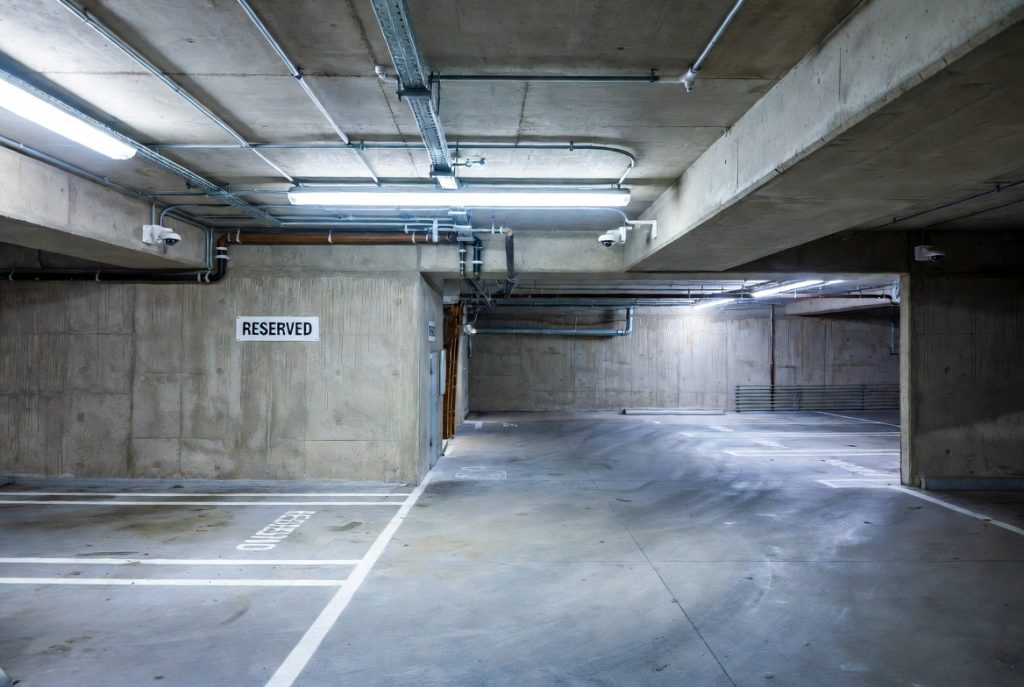
Your building carries general liability and property insurance. That property insurance covers the building — the structure, the common areas, the garage walls and equipment. It does not cover your car. It is not designed to cover your car. The only scenario where the building’s insurance might interact with your vehicle is if the building’s negligence directly caused the damage — a ceiling collapse, a malfunctioning gate arm that came down on your hood, a sprinkler system that flooded the garage.
Even in those scenarios, the building’s insurer will investigate and may deny or delay a claim. Your fastest path to a repaired vehicle is almost always to file on your own comprehensive coverage first and let your carrier pursue the building’s insurer through subrogation.
The garage tenancy agreement you signed almost certainly contains language releasing the building from liability for vehicle damage and theft. That language is not always enforceable — courts have varied on it — but it signals clearly which direction the building is going to point you in when you call.
How Comprehensive Picks Up
Comprehensive coverage is the workhorse of the apartment garage scenario. It covers:
- Theft of the vehicle
- Vandalism (keying, broken windows, slashed tires)
- Damage from falling objects (pipes, ceiling fixtures, debris)
- Fire or water damage (burst sprinkler, flooding)
- Damage from other vehicles hitting yours while parked — in some circumstances (see below)
What it doesn’t cover: damage caused by another identifiable, insured driver who hit your parked car. That should go through their liability. But if they’re unidentified — a hit-and-run in your building garage — you’re into UMPD (uninsured motorist property damage) or comprehensive, depending on your state’s rules and how your carrier interprets the incident.
Your comprehensive deductible is the number to know. In a dense apartment building with tight garage lanes, a $1,000 deductible against a $1,200 repair bill is almost not worth filing — both for the math and the potential rate impact. Many urban drivers who park regularly in garages carry lower comprehensive deductibles ($250–$500) precisely because the incident frequency is higher.
Theft of Contents — The Awkward Middle Ground
Things stolen from inside your car are not covered by your auto policy. Full stop. Auto insurance covers the vehicle and its permanently attached components — not your laptop bag, your gym gear, your AirPods, or your charging cable.
This is where renters insurance steps in. Personal property coverage in a renters policy extends to items stolen from your car — usually subject to your policy’s standard deductible and any sub-limits for electronics. If you regularly keep valuables in your car (which, to be clear, you shouldn’t, but city life sometimes demands it), confirm your renters coverage limit for away-from-home personal property and check whether electronics have a sub-limit.
Some carriers apply a specific sub-limit to items stolen from vehicles — separate from the general away-from-home limit. It’s often $1,000–$2,500. That covers a phone and a laptop; it doesn’t cover a camera kit or high-end audio equipment without a scheduled endorsement.
A Renter’s Parking-Coverage Audit
Spend 15 minutes this week doing this:
- Pull your building’s parking agreement and find the liability disclaimer language — know what they’ve disclaimed
- Confirm your comprehensive coverage is active and note your deductible
- Find your renters policy’s personal property limit and check for electronics sub-limits
- Ask your renters carrier: “Are items stolen from my locked car in my apartment garage covered?”
- If you’re parking in street spots rather than a building garage, the same coverage framework applies — just with slightly different risk profiles
The coverage is there. The problem is that it’s stitched across two policies with a gap in the middle. Knowing where each policy starts and stops is how you avoid a situation where everyone points at the other guy and you pay out of pocket for something you thought you were covered for.
What to do this week: Read your building’s parking agreement for liability disclaimer language, then confirm with both your auto and renters carriers which policy covers theft from your parked car and at what limit. Compare coverage options that actually fit how you drive →
Last modified: January 14, 2026
About the Author: Jordan Lee