

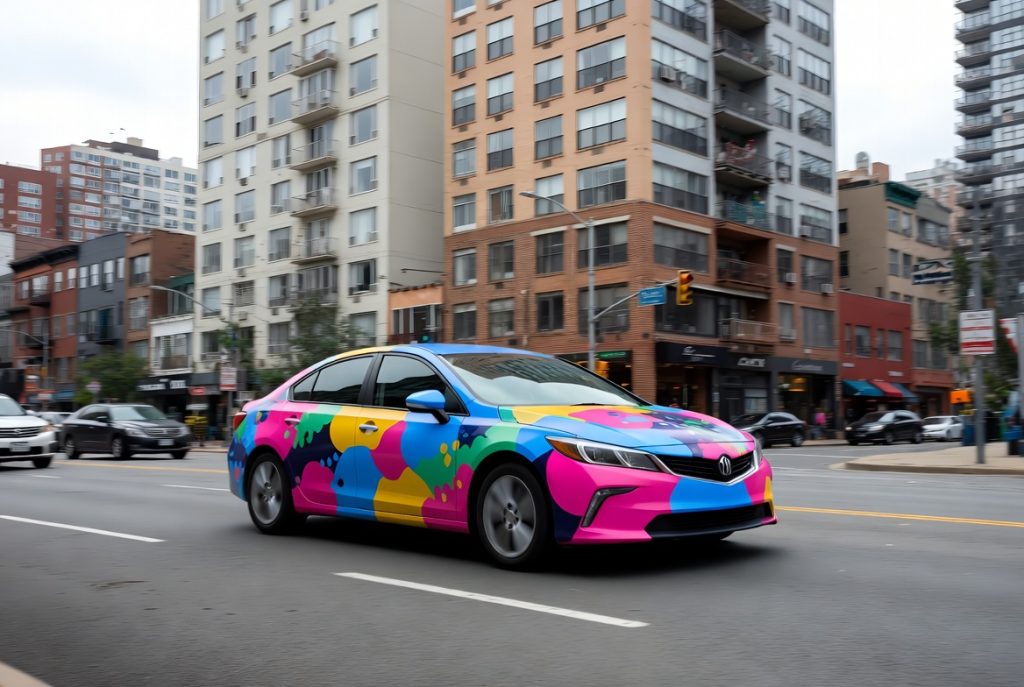
Earning a few hundred dollars a month for driving around with an ad on your car sounds like free money. It mostly is — until your policy reclassifies the vehicle as commercial and a claim gets denied mid-adjustment.
Wrap-ad platforms are legitimate. Carvertise and Wrapify have been around long enough to have actual clients and actual payouts. The earnings are real. The insurance problem is quiet, consistent, and fixable — but only if you address it before wrapping, not after.
How Wrap-Ad Platforms Work, Briefly
You apply, they match you with an advertiser campaign based on your location, daily mileage, and route patterns. A professional installer puts a partial or full vinyl wrap on your car. You drive normally. Platforms track compliance via GPS. You get paid monthly — typically $100–$450 depending on campaign, market, and mileage requirements.
You don’t change your driving behavior. You don’t pick up passengers. You don’t deliver anything. The car is simply a moving billboard. The campaign ends, the wrap comes off, the car is back to stock. It’s closer to a billboard rental than a commercial operation.
That’s the framing that makes it feel low-stakes. It’s not quite accurate from an insurance perspective.
What “Commercial Use” Means for Your Premium
Most personal auto policies include language excluding coverage when the vehicle is “used for hire,” “used in a business,” or “used to carry persons or property for a fee.” Wrap advertising doesn’t carry persons or property. But the “used in a business” clause is broader than it sounds.
When you sign a contract with Wrapify and receive payment for having your car be a branded vehicle, some underwriters interpret that as business use — particularly if a claim arises and the opposing party’s attorney surfaces your wrap agreement in discovery. The outcome isn’t guaranteed denial, but it creates a coverage dispute where you’d rather have clarity.
Some carriers explicitly exclude wrap advertising. Others have no position. A few have issued written guidance that personal-use driving with a commercial wrap doesn’t constitute commercial use for coverage purposes. The variance is significant enough that assuming your policy covers it without checking is a mistake.
How to Disclose Properly
The right move is a single phone call or email to your carrier before you sign the platform agreement. Frame it accurately: “I’m planning to participate in a vehicle wrap advertising program where I drive normally and receive monthly payment for the ad placement. Does this affect my coverage or require an endorsement?”
You want the answer in writing — an email reply is sufficient. If the carrier says no coverage impact, you have documentation. If they say it triggers a commercial reclassification, you have two options: request a commercial endorsement (which may cost $15–$40/month) or decline the campaign.
The endorsement route is worth running the math on. If the wrap earns $250/month and the endorsement costs $30/month, you’re still ahead $220. If the endorsement triggers a full commercial reclassification that triples your rate, the math changes entirely. Carriers vary on this — it’s not predictable without asking.
A Pros-and-Cons List That Holds Up
On the upside: passive income without behavior change, no passengers, no deliveries, no schedule. Campaigns run 1–3 months; exit is clean. Platforms are reputable and payment is reliable.
On the downside: the vehicle wrap changes the visual presence of your car, which may affect parking situations in residential buildings with rules about commercial signage. Some HOAs and street permit zones have restrictions. And the insurance disclosure process, while simple, requires a step most applicants skip.
The people who run into problems are the ones who wrap first, disclose never, and then find out their carrier’s position when an adjuster sees photos of the incident vehicle and asks about the advertisement on the door.
What to do this week: If you’re considering a wrap-ad platform, send your carrier a one-paragraph email describing the program and ask for their coverage position in writing before signing. Compare coverage options that actually fit how you drive →
Last modified: April 7, 2026
About the Author: Jordan Lee