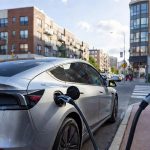

EVs aren’t just gas cars with different fuel. They’ve shifted the actuarial math hard enough that your policy reads differently — usually in three lines that quietly cost more and three that quietly cost less. Most EV owners find out about the expensive ones at renewal. We’d rather you find out now.
Why EV Repair Costs Are Different
The insurance industry repriced EVs because they had to. The early data showed repair costs running 20–30% higher than comparable ICE vehicles, driven primarily by two factors: the cost of replacing or repairing battery packs, and the density of ADAS (advanced driver assistance system) components that have to be recalibrated after even minor collisions.
A fender-bender on a Tesla Model 3 can require a camera recalibration, a radar alignment, and in some cases a bumper assembly that houses sensors not found on any gas vehicle. The parts are proprietary, the labor requires specialized equipment, and the shop network that can actually do the work correctly is smaller than you’d expect — even in major cities. That repair bottleneck translates directly to higher premiums.
The Three Line Items That Cost More
- Collision coverage: Higher repair costs mean higher collision premiums, full stop. This is the biggest EV premium driver. If you’re switching from a comparable gas vehicle, expect to pay noticeably more here.
- Comprehensive coverage for the battery: Battery pack replacement — whether from a manufacturing defect claim, fire, or flood damage — is an expensive event. Carriers have updated their actuarial tables to reflect this. Some policies now include specific battery replacement language; others treat it as standard comp. Know which yours is.
- Rental reimbursement: EV repair times run longer than ICE repair times, largely because of parts availability and the specialized shop network. If you need a rental while your car is being fixed, you’ll need it longer. The standard $30/day for 30 days may not be enough — consider upgrading this line item if it’s available.
The Three Line Items That Cost Less
- Roadside assistance: EVs have fewer moving parts. No oil changes, no transmission fluid, no belts. Mechanical breakdowns — the classic roadside scenario — happen significantly less often. Some carriers price roadside lower for EVs; some don’t, but it’s worth asking.
- Liability in ZEV states: Several states that have adopted zero-emission vehicle mandates have introduced pricing incentives for EV owners. California, Colorado, and a handful of others offer modest premium reductions through state programs or carrier-specific ZEV discounts. Check whether your state has one.
- Comprehensive for non-collision events: EVs don’t have gas tanks. No gas tank means no fuel fire risk, which is one of the more expensive comprehensive claim scenarios for ICE vehicles. EV fires happen, but through different mechanisms — and overall, EVs have lower rates of fire than comparable ICE vehicles per mile driven. Some carriers have started to price this.
What to Ask Before Your Renewal
Renewal season is when most EV owners realize their premium has crept up and don’t know why. Here’s the four-question framework for the call:
- Does your policy cover battery pack replacement under comprehensive, and up to what limit?
- Does your carrier offer any ZEV discount, and have they applied it?
- What’s the daily limit and duration on rental reimbursement — and is it enough given average EV repair timelines?
- Has your carrier updated their pricing model for ADAS recalibration costs in your vehicle’s make and model?
The last question sounds technical, but it matters: carriers who haven’t updated their models for your specific vehicle may be underpricing — which sounds good until they surcharge you at the next renewal after processing your claims data. You want a carrier who has actually priced your car, not one who’s guessing and will correct later.
Shopping around at EV renewal is more important than with ICE vehicles, because carrier sophistication on EV pricing varies enormously right now. The spread between the best-priced and worst-priced carrier for the same EV can be $800+ per year.
What to do this week: Pull your renewal declaration and locate the collision and comprehensive line items — then search your carrier’s website for any ZEV discount you may not be receiving. Compare coverage options that actually fit how you drive →
Last modified: January 7, 2026
About the Author: Jordan Lee