
Your car insurance treats the bike on the rack as somewhere between “personal property” and “your fault.” Knowing which it is — before you load up — is a five-minute call that saves a four-figure replacement. Most multi-modal drivers carry expensive gear without knowing which policy actually covers it.
What Auto Policies Cover (and Don’t) on the Rack
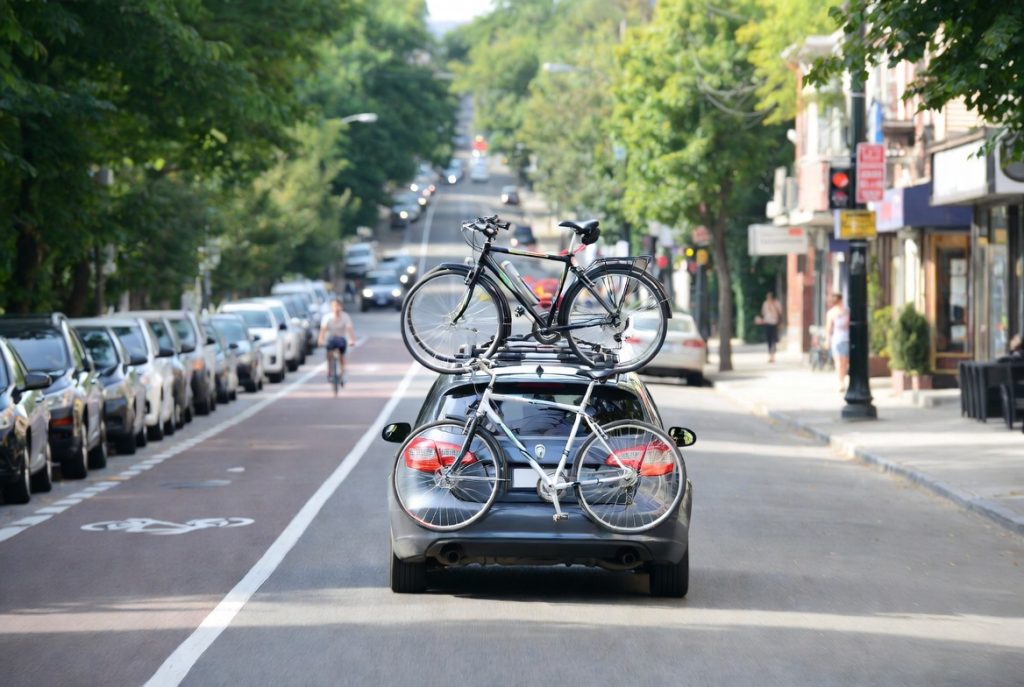
Here’s the uncomfortable truth: your auto insurance almost certainly does not cover the bike strapped to your roof or hitch. Standard auto policies cover the vehicle and its factory components. A bike rack is an aftermarket accessory. The bike is personal property that doesn’t belong to the vehicle at all.
Auto comprehensive coverage might extend to a bike rack if it’s a permanently attached, factory-installed feature — rare. It will not extend to the cargo on the rack under any standard interpretation. Some carriers offer a “custom equipment” endorsement that covers aftermarket additions to the vehicle; that might cover the rack itself, but still not the bike.
What about damage caused by cargo falling off the rack? If your improperly secured bike flies off the back on the highway and hits another car, your auto liability coverage likely applies to the damage caused to others. But your bike? Gone.
Homeowners and Renters Insurance Pickups
This is where the actual protection lives for most people. Renters and homeowners policies cover personal property — including off-premises. “Off-premises” is the key phrase: it means coverage follows your stuff when it leaves your apartment. The bike on your car rack, in a parking garage, locked to a pole outside a coffee shop — all potentially covered under personal property.
The catch: most renters policies have a default sub-limit for personal property away from home, often 10% of your total personal property limit. If you have $30,000 in personal property coverage, that’s $3,000 away-from-home — enough for a mid-range bike, probably not enough for an e-bike.
Also relevant: the deductible. A $500 deductible on a $700 bike replacement doesn’t move the needle. Run the math before you file.
Endorsements Worth Their Cost
- Scheduled personal property (floater): For bikes and e-bikes above $1,500, a scheduled item endorsement on your renters or homeowners policy provides coverage at stated value — no deductible in many cases, no depreciation applied. Cost is typically 1–2% of the item’s value annually. A $3,000 e-bike costs $30–$60/year to schedule. Worth it.
- Dedicated bike insurance: Markel, Velosurance, and a handful of specialty carriers write standalone bicycle policies. These cover theft, accidental damage, racing, and in some cases travel. If cycling is a significant financial or lifestyle investment, this is cleaner than patching together renters endorsements.
- Cargo box damage: A Thule or Yakima roof cargo box is a $500–$900 item that regularly gets damaged in garages with low clearances. (Yes, it happens more than you’d think.) This falls into the same coverage gap as bikes — not auto, not renters by default. A scheduled property endorsement covers it. So does some comprehensive custom-equipment coverage if you add the rider.
A Simple Loading-Day Routine
Before every trip with gear on the rack:
- Confirm the rack and bike are locked — even if it’s just a cable lock, it matters for theft claims (most require evidence of forced entry or locked storage)
- Photograph the loaded configuration before you drive — this creates a timestamp record of condition
- If you’re hauling something above $1,000 in value, spend 30 seconds confirming which policy covers it and what the deductible is
- For roof cargo: check clearance height before every garage entry, not just the first time
The multi-modal life means your expensive gear moves around constantly — between the car, the elevator, the building’s bike room. Know which policy owns it at each stage. It’s not complicated once you map it out, and it’s the kind of thing you only wish you’d done after you needed it.
What to do this week: Find the “personal property away from premises” limit in your renters or homeowners policy and compare it to the replacement value of the gear you regularly carry — if there’s a gap, ask your carrier about a scheduled property endorsement. Compare coverage options that actually fit how you drive →
Last modified: January 11, 2026
About the Author: Jordan Lee