
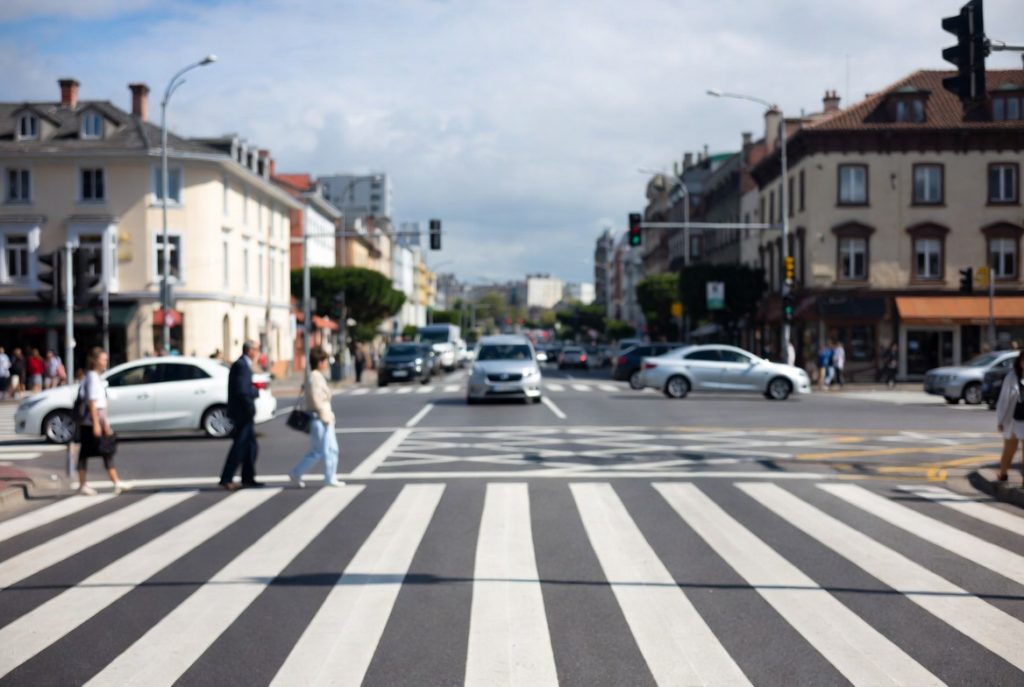
Pedestrian-involved claims behave differently than fender benders. The dollar amounts are bigger, the fault analysis is more nuanced, and the policy lines that matter aren’t the ones drivers usually focus on. If you drive in a city where crosswalks and signal timing change block to block, this math is worth understanding before you need it.
Why Bodily Injury Limits Matter Most Here
Pedestrian accidents go straight to your bodily injury liability coverage. Not collision. Not comprehensive. Bodily injury — the line that pays for the other person’s medical bills, lost income, and pain and suffering.
State minimums for bodily injury are dangerously low for pedestrian incidents. A $25,000 minimum sounds like money until you account for a fractured femur, an ER visit, an orthopedic surgery, and six weeks of lost wages at a knowledge-worker salary. The total can hit $80,000–$150,000 without anyone being particularly litigious. If you carry a 25/50 policy — $25,000 per person, $50,000 per accident — you may be personally liable for the gap.
The realistic floor for urban drivers is $100,000 per person / $300,000 per occurrence. If you rent and don’t have significant assets, you might argue that lower limits aren’t catastrophic. But if you own property, have savings, or earn above-median income, your assets are accessible in a judgment. Umbrella policies that add $1M of liability coverage typically cost $200–$400 per year. That math is almost always worth it.
Comparative Negligence in Plain English
Most states use some version of comparative negligence, which means fault gets divided between parties. A pedestrian who crossed mid-block, ignored a signal, or was looking at their phone might be found 30 or 40 percent at fault — which reduces what they can recover from you by that percentage.
A few states still use contributory negligence, where any fault on the pedestrian’s part bars their recovery entirely. Those states are outliers and the trend is away from them. Don’t assume you’re off the hook because the pedestrian made a bad decision.
In practice, pedestrian claims settle with fault splits that favor the pedestrian. Juries — and adjusters anticipating juries — tend to view car-versus-pedestrian cases sympathetically toward the person on foot. Even in a split-fault scenario, you may end up responsible for 60–70 percent of a large number.
Your adjuster will investigate signal timing, crosswalk markings, visibility, vehicle speed, and whether you had time to stop. Document everything at the scene: photos, witness names, exact location. The documentation you collect in the first 20 minutes shapes how the claim resolves months later.
Med Pay and PIP — The Under-Discussed Lines
Medical payments coverage (med pay) and personal injury protection (PIP) are often treated as optional extras. For urban drivers, they’re quietly important.
Med pay covers medical expenses for people in your vehicle regardless of fault. PIP covers you and your passengers for medical and sometimes lost income, also regardless of fault — and in some states extends to pedestrians you hit. The extension to pedestrians is state-specific and worth verifying.
In no-fault states, your own PIP pays first for your injuries in any accident. The interaction between your PIP, the other party’s bodily injury claim against you, and their own health insurance is where most pedestrian claim confusion lives. Get clear on your state’s structure before an event makes it urgent.
Med pay and PIP limits are often set low by default — $5,000 or $10,000. At urban medical costs, those limits can evaporate in a single ambulance ride and ER visit. If you’re reviewing your policy, bump these lines before the liability section. They’re usually cheap to increase.
A Two-Minute Liability Self-Audit
Open your declarations page. Find these four numbers:
Bodily injury per person: Is it $100,000 or higher? If not, you’re underexposed in any pedestrian scenario in a city.
Bodily injury per occurrence: Should be at least 3x the per-person limit.
Med pay or PIP limit: Is it above $10,000? If not, consider doubling it — the cost difference is usually under $50/year.
Umbrella coverage: Do you have it? If not, price it. For most urban drivers with any accumulated assets, it’s the highest-leverage insurance dollar you can spend.
You can’t control how pedestrians behave at intersections. You can control whether your coverage is calibrated to the city you’re actually driving in.
What to do this week: Pull your declarations page and verify your bodily injury limits. If they’re below $100K/$300K, get a requote — the premium difference is usually smaller than expected. Compare coverage options that actually fit how you drive →
Last modified: February 2, 2026
About the Author: Jordan Lee