
Bike lane designs have changed faster than most driver’s-ed curricula. Three patterns now drive most of the friction between cars and cyclists — and almost all of it is preventable. Not because cyclists are fragile or drivers are reckless, but because the infrastructure changed and nobody sent out a memo.
Here’s the honest update urban drivers need.
How Protected Lanes Have Shifted Right-of-Way
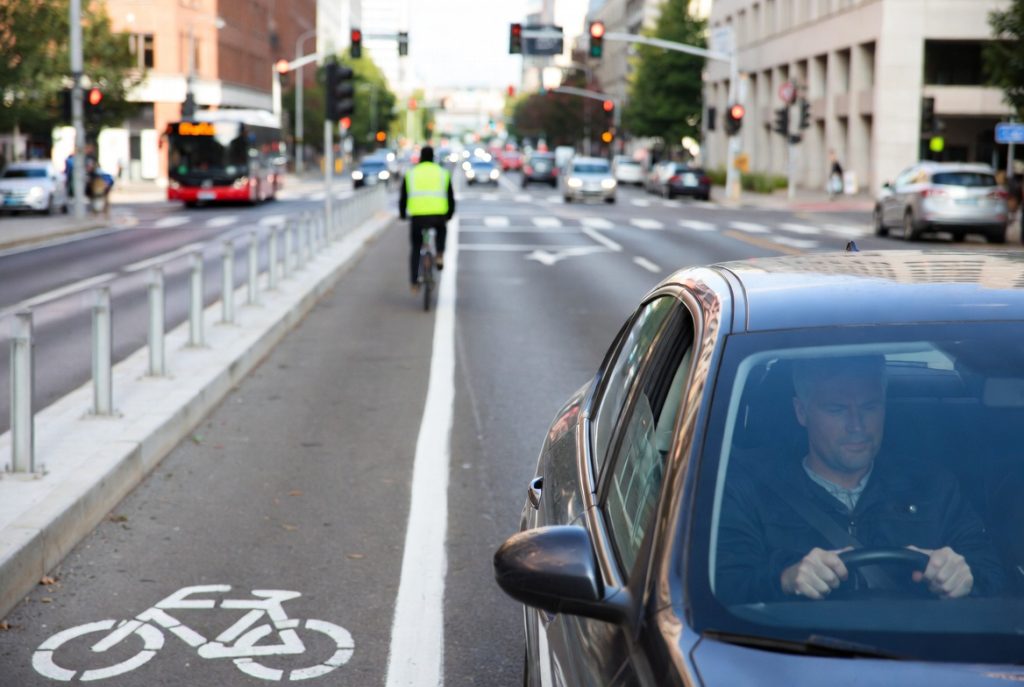
The old mental model: bike lane is a stripe, drivers watch for it. The new reality: protected lanes often sit between the travel lane and parked cars. That means the car door zone is now on the street side, not the sidewalk side. Cyclists aren’t next to you anymore — they’re in a corridor that puts parked cars between them and you.
Right-of-way logic has shifted with the design. At intersections in cities with protected-lane systems, cyclists in a protected lane typically have priority through the turn box. Many drivers still don’t know that box exists, let alone what it means. When a claim happens at one of those intersections, adjusters do know — and it shows in fault allocations.
Three Patterns That Produce Most Claims
City traffic data tends to cluster cycling incidents into a few recurring scenarios:
1. The right-hook. Driver turns right across a bike lane without checking. The cyclist, traveling straight, has the right-of-way. The driver almost always bears primary fault. At-fault findings here run 80–100 percent in most states.
2. The left-hook at intersections. Driver turns left across oncoming bike traffic. Same structural problem, harder to see, equally clear on fault. Newer protected intersections are specifically designed to separate these timing conflicts — but only if you read the signal phases correctly.
3. The parking-exit pull-out. Driver leaving a parallel parking spot swings left into the bike lane without seeing the cyclist. This one surprises people because it’s slow-speed and low-drama until it isn’t. Injury rates are higher than you’d expect from a 5-mph maneuver.
The “Dooring” Question (and What It Costs)
Dooring — opening a car door into an oncoming cyclist — has its own clause in several states’ vehicle codes. In most jurisdictions, the person opening the door is legally responsible for ensuring it’s clear to do so. That means the driver or passenger who opens the door, not the cyclist who gets hit.
Dooring incidents show up on auto insurance claims more than most drivers expect. The cyclist may claim medical costs, bike repair, lost wages, and pain and suffering against your bodily injury and property damage liability. A cyclist with significant injuries and a clear-fault scenario can generate a $30,000–$80,000 claim on a single door-open event.
Parking-protected lanes are designed in part to eliminate dooring — but they only eliminate it for the street-side door. Passengers exiting to the sidewalk side of a parked car are still a door-zone risk for foot traffic. Drivers exiting to the street are the protected-lane concern.
When the cyclist is at fault — they ran a signal, came up on the wrong side, made an unpredictable move — that comparative negligence can reduce or eliminate your liability share. Don’t assume you’re at fault just because a cyclist was involved. Document what you can at the scene, same as any accident.
Habit-Level Fixes
None of this requires relearning how to drive. It requires three reflex updates:
The Dutch reach. Open your car door with your far hand. The movement forces your torso to rotate toward the lane, making you look before the door opens. Takes two weeks to make automatic.
Right-turn mirror check. Before any right turn, check the right mirror for cyclists catching up. In cities with dedicated signal phases for bikes, wait for the bike phase to clear before completing the turn.
Parking-exit shoulder check. Before pulling left out of a spot, check the mirror, then look over your left shoulder — not just to the left of your vehicle, but back along the lane. Cyclists travel faster than pedestrians and close distance quickly.
These aren’t defensive driving for beginners. They’re updates to urban driving technique that reflect how city streets actually operate now. Your insurance premium reflects how city streets actually operate now too.
What to do this week: Look up your city’s bike lane map and identify the protected-lane segments on your three most common routes. Practice the Dutch reach on your next five parking exits. Compare coverage options that actually fit how you drive →
Last modified: January 30, 2026
About the Author: Jordan Lee