

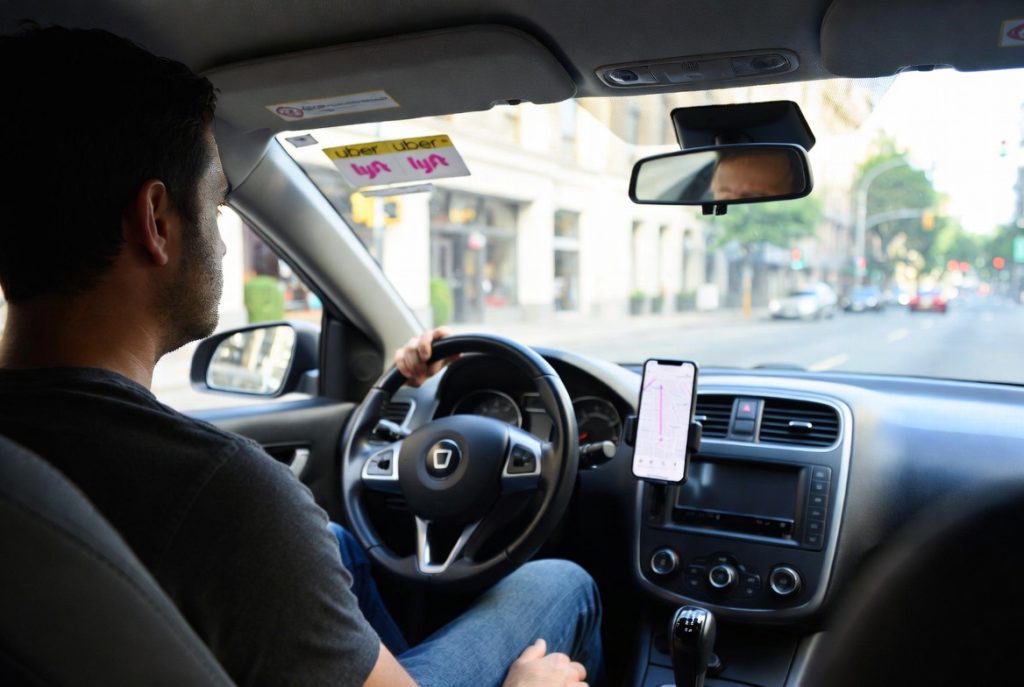
Your personal auto policy quietly stops covering you the second the app says “online.” Not when the passenger gets in. Not when you accept the request. The moment you toggle on. A rideshare endorsement plugs the gap — but only one of the three coverage periods actually behaves the way most drivers think it does.
The Three “Periods” of Rideshare Insurance
Every TNC (transportation network company) policy — Uber’s, Lyft’s, yours — slices a driver’s workday into three segments. Understanding them isn’t optional if you drive for pay.
- Period 1: App is on, waiting for a request. No passenger, no trip in progress.
- Period 2: You’ve accepted a ride and are driving to pick up the passenger.
- Period 3: Passenger is in the car, trip is active.
Periods 2 and 3 are where Uber and Lyft’s contingent commercial coverage kicks in at meaningful limits — typically $1 million liability. Period 1 is the quiet disaster zone.
Where Personal Policies Stop Covering You
Standard personal auto policies include language that excludes vehicles used for “hire” or “livery.” The moment your app goes online, most carriers consider you in commercial operation — even if you’re just sitting in a Whole Foods parking lot waiting for a ping.
During Period 1, Uber and Lyft offer only limited contingent liability coverage: $50,000 per person, $100,000 per incident, $25,000 property damage. That’s it. No comprehensive. No collision. If someone rear-ends you while you’re waiting on a request, you may be staring at a denied personal claim and TNC liability-only coverage that doesn’t touch your own car.
Common denial language you’ll see: “vehicle operated for compensation at time of loss.” One logged-in screenshot from your phone and your carrier has what they need.
What Endorsements Actually Add
A rideshare endorsement — available from carriers like State Farm, Allstate, Erie, and USAA in most states — extends your personal policy to cover Period 1. That means your comprehensive and collision coverage travels with you through all three periods, your personal deductible applies instead of the TNC’s gap coverage, and your policy doesn’t lapse because of commercial use exclusions.
Cost is typically $15–$25 per month added to your premium. For anyone driving more than a couple of shifts per week, the math is obvious.
What endorsements generally don’t add: they don’t replace Periods 2 and 3 TNC coverage, and they don’t typically stack on top of it. They fill the Period 1 gap and hand off.
Food Delivery Isn’t the Same Animal
Doordash, Uber Eats, Instacart, and Grubhub are treated differently from passenger transport under most TNC frameworks — and coverage reflects that. Doordash provides $1 million liability only while on an active delivery (food in car). Between accepting and pickup, and while waiting for the next order, you’re in the same Period 1 exposure as rideshare — except delivery endorsements are even less common than rideshare ones.
Some carriers offer a single endorsement covering both passenger and delivery. Others separate them. If you flip between apps — DoorDash on Tuesday, Lyft on Friday — you need to confirm your endorsement covers all of it explicitly.
When You Need a Full Commercial Policy Instead
If you’re driving more than 30 hours per week across platforms, running a side fleet, or doing any kind of scheduled charter work, a rideshare endorsement isn’t enough. Commercial auto kicks in at that volume, and carriers will tell you so if you ask them directly. The crossover point varies by state, but a personal policy with an endorsement is designed for the casual to part-time driver — not someone treating gig work as a primary income stream.
The honest conversation to have with your carrier: “I drive for [platform] X hours per week. Does my endorsement cover that volume?” Get the answer in writing if the number is high.
What to do this week: Open your declarations page, search for the word “livery” or “hire,” and call your carrier to ask whether your current policy covers Period 1 rideshare activity. If the answer is no or unclear, ask specifically about a rideshare endorsement. Compare coverage options that actually fit how you drive →
Last modified: January 3, 2026
About the Author: Jordan Lee