

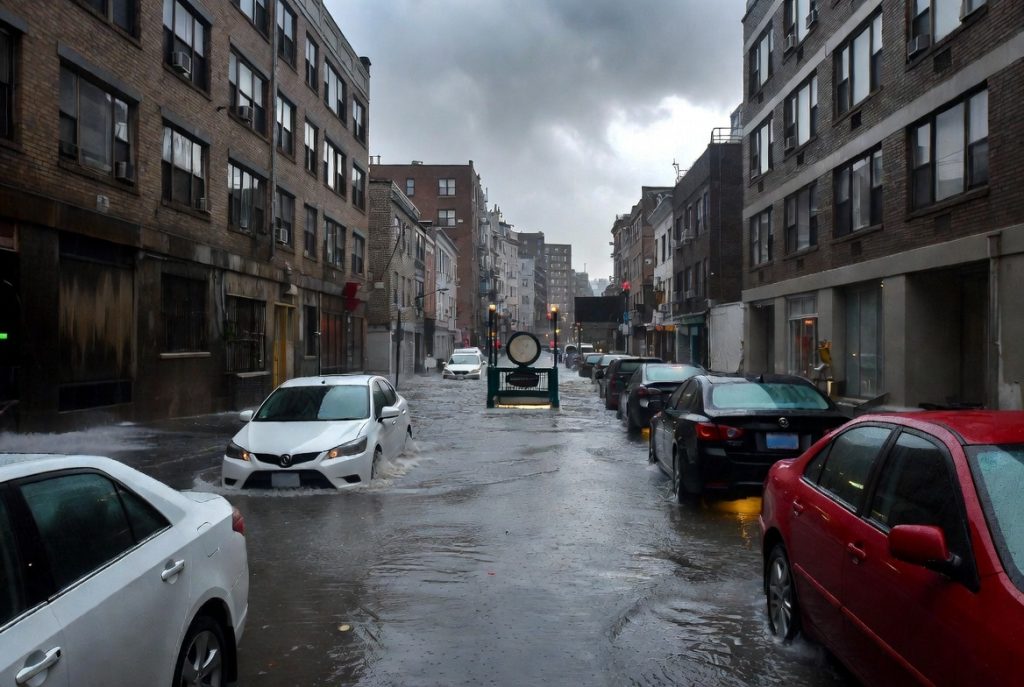
Comprehensive coverage handles flash flood damage. It also handles total loss when the same flood ruins the engine. The question that matters most after an urban flood event isn’t whether you’re covered — it’s how fast you file, and whether you understand the claim before the adjuster does. By the time the water recedes in a major event, body shops in that city are already booked four weeks out.
Comprehensive’s Flood Scope
Comprehensive coverage — the “other than collision” portion of your auto policy — covers flood damage explicitly. This includes water intrusion from rising streets, storm surge, drainage overflow, and flash flooding. A car submerged during a sudden urban flood event is a comp claim. A car with water-damaged electronics from a flooded underpass is a comp claim. Your deductible applies, the same as for any comp event.
The coverage extends to all direct damage caused by the flood: exterior, interior, mechanical, and electrical. ECU damage from minor flooding — where water doesn’t visibly submerge the car but enters through door seals or the engine bay during a heavy downpour — is one of the more expensive and underappreciated comp claims. Modern vehicles have ECUs and sensor clusters throughout the body, and water intrusion that isn’t immediately visible can cause progressive electrical failure weeks after the event.
Document water line marks inside the vehicle immediately after the flood. A highwater line on the door panel tells the adjuster exactly how far the water rose. Photographs of this, the exterior, the undercarriage, and any standing water context (street flooding in the background) strengthen the claim before the car is moved or cleaned.
Total Loss Thresholds
When flood damage repair costs exceed a threshold — usually 70–80% of the car’s actual cash value, depending on the carrier and state — the vehicle is declared a total loss. For older or lower-value vehicles, this threshold can be hit at damage levels that look superficially manageable: moderate interior saturation, ECU damage, and structural rust from prolonged water contact can push repair estimates past the threshold quickly.
A totaled vehicle receives a salvage title. Salvage titles follow the VIN permanently and significantly reduce the vehicle’s resale value — often 20–50% below comparable clean-title vehicles. If your car is approaching total loss status and you want to retain it for repair rather than accept the carrier’s total loss payment, most carriers allow “owner retention” — they pay the total loss value minus the salvage value, you keep the car, and you repair it with a rebuilt title.
The rebuilt title path makes sense for enthusiasts with specific vehicles, but for most urban drivers, accepting the total loss payout and sourcing a replacement is cleaner. The caveat: replacement inventory in a city after a major flood event is tighter than normal, and used car prices spike when demand concentrates. Filing fast — before the event settles into the market — gives you more purchase options at closer-to-normal prices.
Why Filing Fast Matters
Mold. This is the practical reason speed matters more than it seems for flood claims. A saturated car interior that sits for more than 48–72 hours in humid conditions begins developing mold in the carpet, foam padding, and HVAC ducting. Mold remediation adds cost, reduces the likelihood of a successful repair outcome, and can become a health issue significant enough that some adjusters write the car as a total loss based on mold alone.
Filing fast also gets you in the queue for an adjuster inspection before the volume surge that follows any major flood event. After a large-scale urban flooding incident — the kind that makes the news — carriers are managing hundreds or thousands of claims simultaneously. Early filers get faster inspection scheduling, faster shop assignments, and faster resolution. Late filers wait.
An After-Storm Protocol
Photograph before you open any doors. Don’t start the engine if the water line reached the air intake or door seams — hydrolocking an engine by trying to start a flooded car can turn a repairable claim into a complete mechanical failure. Call your carrier before moving the vehicle if possible; some programs prefer to inspect in place.
If the car must be moved for safety reasons, document the move in your claim notes. Most adjusters understand that cars can’t stay blocking a flooded street, but noting that you moved it, why, and what the condition was at that point protects you from a later dispute about what the damage looked like in situ.
Keep the car sealed until the adjuster inspects it. Don’t clean the interior, attempt drying, or remove items. The current condition — including the water marks, any debris, and any visible electrical or mechanical issues — is the claim.
What to do this week: Save your carrier’s claims phone number in your phone contacts and take a 5-minute walk-around video of your car to use as a pre-loss baseline for any future flood claim. Compare coverage options that actually fit how you drive →
Last modified: March 20, 2026
About the Author: Jordan Lee