

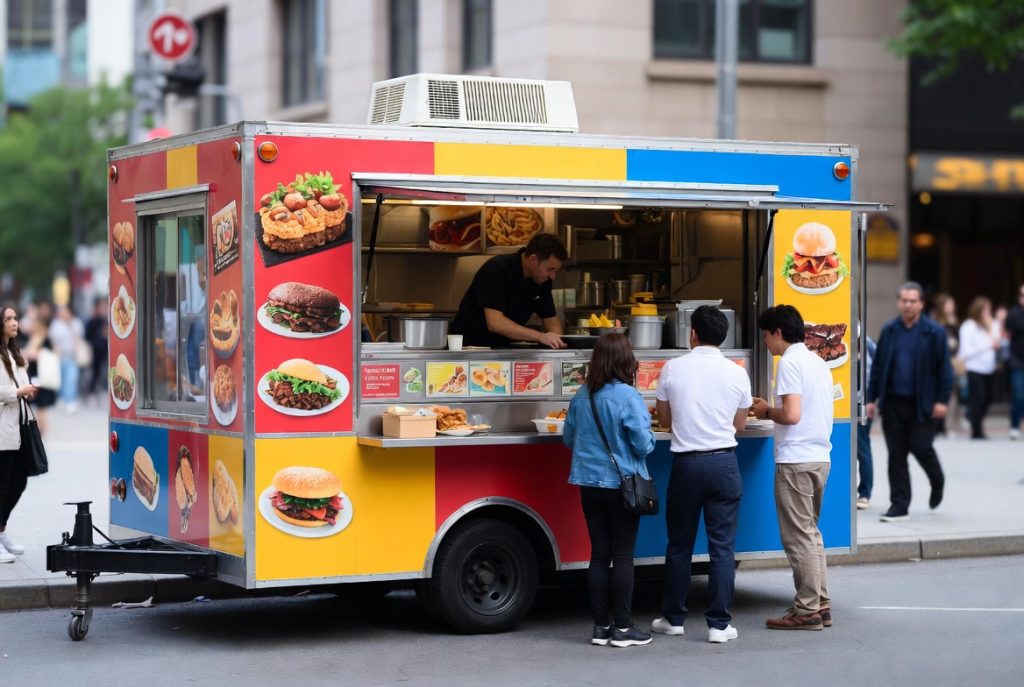
A food truck isn’t a car with a kitchen. It’s three policies bundled together — and skipping the wrong one is the difference between a great season and a closed business. Most food truck operators think about insurance once, when they’re getting their permit. Then they don’t think about it again until something burns or someone slips.
Let’s map the coverage stack correctly before that happens.
Commercial Auto
The truck is a vehicle. It drives to locations. It parks in traffic. It gets hit in parking lots. Personal auto insurance does not cover a vehicle used for commercial purposes — and a food truck generating revenue is unambiguously commercial.
Commercial auto for a food truck covers the vehicle itself: collision, comprehensive, and liability for accidents that happen while driving. The liability component is critical because food truck routes often involve dense urban streets, tight corners, and unfamiliar parking configurations. A fender-bender in a crowded weekend market can involve multiple vehicles and pedestrians simultaneously.
Cost range for food truck commercial auto: $2,000–$5,000 per year depending on vehicle value, location, and coverage limits. That’s real money. It’s also the foundation everything else sits on.
General Liability
General liability covers what happens when the truck is stationary and serving. A customer slips on a wet mat in front of the window. Someone claims food poisoning after a Saturday lunch. A tent stake puts a hole in a vendor’s neighboring setup.
Most market organizers, festivals, and event venues require proof of general liability before you’re allowed to operate on their property. The standard minimum they ask for is $1 million per occurrence / $2 million aggregate. Carrying less than that effectively bars you from the best revenue opportunities in most cities.
Food contamination coverage is a specific rider worth adding. Standard GL policies may exclude illness claims related to the food itself. A contamination endorsement covers the direct costs — medical claims, recall expenses, business interruption while the truck is taken offline for inspection. It’s not expensive relative to what it covers.
Equipment Coverage
The kitchen inside the truck is where the money is. A commercial griddle, a fryer, a refrigeration unit, a generator, a POS system — the equipment list for even a simple food truck concept runs $15,000–$40,000. None of it is covered by commercial auto. None of it is covered by general liability.
Equipment breakdown coverage pays when a mechanical or electrical failure takes a piece of equipment offline. It is not the same as equipment damage coverage, which addresses physical loss. You want both, or a policy that combines them.
Some carriers offer a food truck-specific package policy that wraps commercial auto, GL, and equipment coverage into one product with one renewal date. These exist and are worth finding. Managing three separate policy calendars on top of running a business is an operational tax you don’t need.
A Simple Stacking Sequence
If you’re starting fresh or auditing an existing setup, here’s the order of operations:
Start with commercial auto — the truck can’t move without it, and nothing else matters if you can’t operate. Confirm that the policy covers the vehicle while the kitchen is running, not just while driving. Some policies have language that affects parked-and-operating scenarios differently.
Add general liability next. Get the limits that your most important venue requires, not the minimum you can find. The cost difference between a $1M and $2M policy is usually under $200/year. The difference in which events you can book is enormous.
Then layer in equipment coverage. Get a current replacement-cost estimate on everything in the kitchen, not the depreciated value. If the fryer fails during peak season and you need a same-week replacement, you’re paying today’s prices — and that’s what your coverage should reflect.
The food truck business has a high failure rate in the first two years. Most of those failures are operational and financial. A handful are coverage failures — the operator didn’t realize a claim wasn’t covered until they were already in the hole. Three policies, properly stacked, remove that from the list of ways a season can go wrong.
What to do this week: Pull your current policy documents, identify which of the three coverage categories are missing or underinsured, and get one quote that addresses the gap. Compare coverage options that actually fit how you drive →
Last modified: May 1, 2026
About the Author: Jordan Lee