
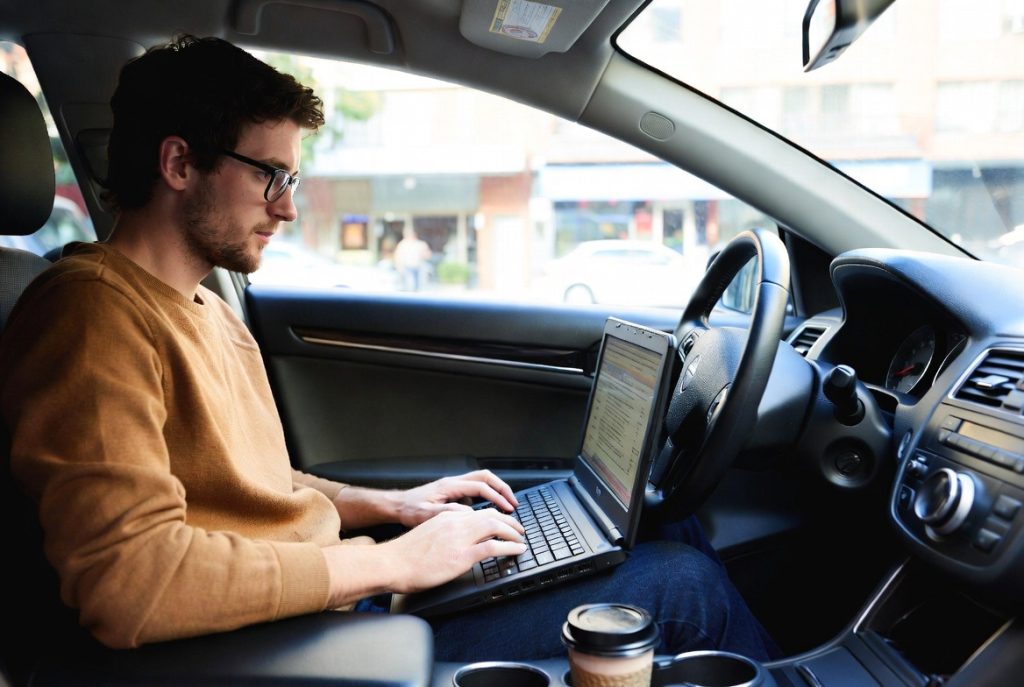
“Mobile worker” used to mean a sales rep with a Crown Vic. In 2026 it means a freelancer answering email from a Honda Fit in a Trader Joe’s lot, a UX consultant on a video call in a parking garage, a writer finishing a draft parked outside a coffee shop that stopped having reliable Wi-Fi. The category got much larger and much more diffuse — and the policy question quietly evolved with it.
Here’s what actually matters about working from a car and how coverage responds to it.
How Insurers See “Working From a Car”
For auto insurance purposes, the critical question isn’t whether you’re using your car as an office. It’s whether you’re using your car to generate income in a way that constitutes business use of the vehicle.
Sitting in a parked car while working remotely doesn’t trigger business-use exclusions. The vehicle isn’t being used for business — it’s stationary. You could be reading a novel. You could be writing invoices. From an auto insurer’s perspective, the use of the vehicle hasn’t changed.
The exclusion activates when the vehicle itself becomes the instrument of income — when you drive to clients, transport work product, or operate in a service context. An architect driving between job sites every day is closer to the line than a copywriter who parks once and works until the battery on their laptop dies.
The Line That Matters
The dividing line in most policies is whether the business use of the vehicle is regular and recurrent. Occasional business trips in an otherwise personal vehicle are usually fine. Systematic daily commercial routing is not.
Where mobile workers get into ambiguous territory: driving to a different parked location each day to work, using the car to transport equipment between client sites, or mixing personal driving with compensated delivery or client-visit patterns. If you’re not sure which side of the line your routine falls on, the right move is to call your carrier and describe it. Most will tell you directly.
If the honest description of your use triggers a business-use endorsement requirement, the cost is usually $20–$50 extra per year. That is not a reason to avoid the conversation.
Renters and Homeowners Pickups for In-Car Gear
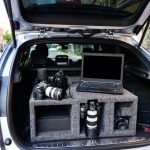
Auto insurance doesn’t cover personal property stored in the vehicle. Your laptop, your camera, your external drives, your mobile hotspot — if the car window gets broken and any of it is taken, the auto claim pays for the window. Your renters or homeowners policy covers the gear.
This requires two things to work: you have renters or homeowners insurance, and the gear is documented. The off-premises personal property clause covers belongings away from your residence, typically up to 10% of your total personal property limit.
If you routinely carry $3,000–$5,000 of equipment in your car, check whether that’s within your off-premises limit. If it’s not, you can increase coverage or schedule specific items. Scheduling costs very little and removes the limit concern entirely.
A 5-Line Declaration That Protects You
The smartest thing a mobile worker can do is document their actual use pattern and keep it consistent. Here’s what that looks like in practice:
Write down: (1) how many days per week you work from the car, (2) whether you drive to different locations for work or stay parked near home, (3) what equipment you regularly have in the vehicle and its approximate value, (4) whether any of your income depends on the vehicle itself, and (5) what your renters policy’s off-premises limit is.
Five lines. This takes four minutes. With those answers, you can have a precise conversation with any insurance agent about whether your coverage is accurate — and identify the one or two things that might need adjusting without overhauling everything.
The mobile worker’s coverage question isn’t complicated. It just requires being honest about what “working from a car” actually means in your specific case, which turns out to be different for almost everyone who does it.
What to do this week: Identify the total replacement value of gear you regularly carry in your car, then compare it against your renters policy’s off-premises personal property limit. Compare coverage options that actually fit how you drive →
Last modified: May 4, 2026
About the Author: Jordan Lee