

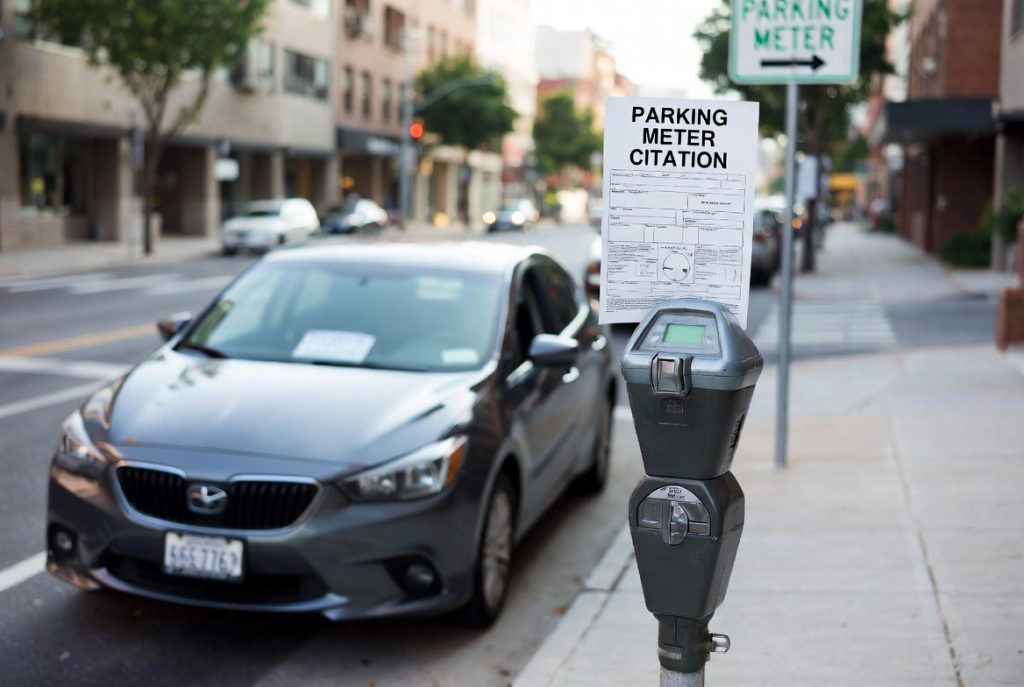
Parking tickets don’t move your insurance. Mostly. The conventional wisdom is essentially correct — a stack of unpaid street-cleaning tickets won’t show up on your driving record and won’t trigger a premium increase. But the word “mostly” is doing real work in that sentence, and the three exceptions worth knowing can cost you in ways the general rule doesn’t account for.
The General Rule
Parking violations are classified as non-moving violations in every U.S. state. Insurance carriers use your driving record — specifically the motor vehicle report (MVR) that your state DMV maintains — to assess risk. Non-moving violations don’t appear on MVRs. Carriers don’t see them, don’t score them, and don’t factor them into premium calculations.
This holds whether you have one ticket or fifty. The number of parking tickets you’ve accumulated has no direct actuarial relationship to your likelihood of being in a collision, and insurers don’t pretend otherwise. The system, in this regard, is actually logical.
Three Exceptions Worth Knowing
1. Tickets that escalate to moving violations. Certain parking situations can be re-classified if the officer witnesses the vehicle operating in an unsafe manner. A vehicle parked illegally that the driver then moves in a dangerous way to avoid the ticket can generate a moving violation on top of the parking fine. Rare, but the dynamic exists.
2. Failure to appear or pay, triggering a license suspension. Some states — notably New York, Illinois, and California — have mechanisms that suspend your license or vehicle registration for unpaid parking tickets that exceed a threshold. A suspended license that shows up on your MVR, even for a non-driving reason, can affect your insurance. Carriers rate suspended-license history as an elevated risk indicator. The underlying cause (parking tickets vs. DUI) may not matter to the carrier’s algorithm.
3. Points assigned for specific parking infractions in specific states. A handful of states assign points for certain parking violations — typically those involving disabled parking spaces or fire hydrant zones — because they create safety hazards. These points, while usually minor, do appear on MVRs and can technically affect your rating. This is uncommon and state-specific, but worth knowing if you’ve collected infractions in those categories.
When Unpaid Tickets Become a Registration Problem
The more practical risk of accumulated parking tickets isn’t your insurance premium — it’s your registration. New York City’s system is particularly aggressive: accumulate enough unpaid tickets and the city can boot or tow your vehicle, and eventually move to block registration renewal at the DMV level. Once your registration lapses, driving the car generates an unregistered vehicle violation, which is a moving violation, which does affect your insurance.
Illinois and California operate similar systems, with different ticket thresholds before registration holds kick in. The specific numbers change, but the mechanism is consistent: unpaid parking fines → registration hold → inability to renew → potential moving violation exposure if you continue driving.
The practical upshot: a parking ticket backlog that would never directly affect your insurance can create a chain of administrative problems that eventually does.
A Short Clean-Up Routine
Most cities now offer online lookup tools that show your outstanding parking violations by license plate or VIN. NYC’s is particularly thorough. Running a check takes about three minutes. If you have outstanding tickets, most cities offer payment plans, and some periodically run amnesty programs that reduce or waive late fees on old tickets.
If you’ve ever received a notice of potential registration suspension for unpaid tickets, check your DMV record directly (usually $5–15 depending on state) to confirm no hold has been formally applied. It’s worth doing before your next renewal cycle rather than discovering the block at the DMV window.
What to do this week: Run your plate number through your city’s online ticket lookup tool and clear any outstanding balances before they approach the registration-hold threshold. Compare coverage options that actually fit how you drive →
Last modified: March 3, 2026
About the Author: Jordan Lee