
Tow trucks damage cars more often than insurers like to advertise. The claim against the towing company is the right path — but the path to that path runs through your own policy first. Knowing the difference before the truck shows up saves you money and a lot of friction.
Why Tow-Related Damage Is Its Own Claim Category
Most drivers assume a tow is a simple transaction: truck arrives, hooks up, delivers vehicle, done. In reality, the tow chain involves multiple parties (your carrier’s roadside dispatch, a subcontracted tow operator, the receiving shop), rushed conditions, and equipment that varies widely in quality and suitability. Things go wrong.
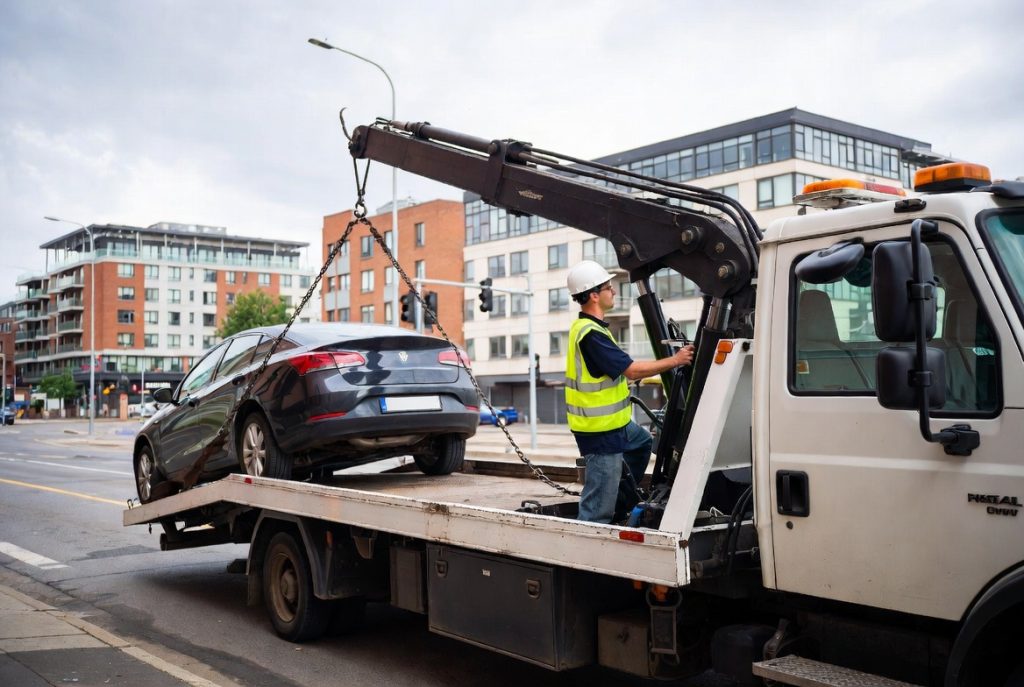
Common tow-related damage: scratched undercarriage from improper hook placement, tire sidewall damage from wheel-lift misalignment, transmission damage from towing in drive on an AWD vehicle, broken tie-down points, and body damage from the vehicle shifting against improperly secured straps. Parking enforcement tows — the hostile version — generate a disproportionate share of damage complaints because speed and volume take priority over care.
The challenge: the damage often isn’t visible until after the vehicle is delivered. You didn’t see it happen. The tow operator is long gone. And now you’re in a he-said/she-said dispute about whether the scratch was there before the tow.
Tow Company Liability Insurance, Plainly
Professional towing companies carry commercial liability insurance that should cover damage they cause during a tow. The specific coverage is called garage-keeper’s legal liability (GKLL) — it covers damage to vehicles in the operator’s care, custody, and control. When they’re towing your car, they’re in custody of it. GKLL applies.
On-hook coverage is a related form — it covers the vehicle while it’s literally on the tow truck or under tow. Some carriers split this into separate lines; others combine them. The practical result is the same: the tow company’s commercial policy should be the primary payer when their operation causes the damage.
The problem is that not all tow operators carry adequate limits, maintain current policies, or cooperate readily with claims. Municipal contract tow operators have additional layers of bureaucratic friction when disputing damage. Smaller independent operators may carry minimal coverage that doesn’t fully reimburse repair costs.
When Your Comp Policy Is the Right First Stop
If the tow company disputes liability or delays response, your own comprehensive coverage can step in. Tow-related damage that isn’t collision-caused (you didn’t hit anything; the tow truck mishandled the vehicle) often falls under comprehensive. Your insurer pays the repair, then pursues subrogation against the tow company’s carrier to recover the payout.
Subrogation is your insurer going after the party who actually caused the loss. You don’t have to manage that process — they do. You pay your deductible; if subrogation succeeds, you may get it back.
Filing through your own comp policy does create a claim record. In most states, comprehensive claims don’t surcharge the same way collision claims do — but confirm with your carrier. If the claim is small and you can establish the tow company’s liability directly, pursuing them first (or their insurer) is cleaner for your record.
A Pre-Tow Documentation Routine
The dispute almost always hinges on what you can prove about the vehicle’s condition before the tow. Pre-tow documentation takes three minutes and makes the difference.
Walk around video. Before the truck hooks up, do a slow, 360-degree video of the vehicle. Narrate as you go: “Front left quarter panel, no damage. Rear bumper, existing scuff at the left corner.” This establishes baseline condition with a timestamp.
Photo the hook-up point. Before the operator drives away, photograph how the vehicle is rigged. If something looks wrong — improper wheel-lift placement, straps over body panels, anything that looks improvised — note it verbally in the video.
Get the operator’s information. Company name, truck number, driver’s name, and the commercial insurance carrier name if they’ll share it. Many operators have this on their vehicle door.
Inspect at delivery. Don’t sign anything until you’ve done another walk-around at the destination. Any damage that appears after the tow should be noted on the delivery paperwork before you sign.
If you’re dealing with a city tow — your car was booted or impounded — the documentation routine at the impound lot on pick-up is the same. Note and photograph any damage before driving away. Contesting damage after the fact is much harder once you’ve left the lot.
You won’t need most of this documentation on most tows. But towing incidents that generate disputes follow a predictable pattern: driver trusted the process, didn’t document, discovered damage later, found themselves without evidence. The routine costs you nothing.
What to do this week: Save the tow company’s number and your roadside assistance number together in your phone. Add a note to call them for pre-tow documentation if you’re ever in a situation where a tow is needed. Compare coverage options that actually fit how you drive →
Last modified: February 14, 2026
About the Author: Jordan Lee