
A damaged EV battery is the most expensive component on any consumer car. The line between “covered by your insurance” and “covered by the OEM” is more important to know than the line between comprehensive and collision. Get the sequence wrong when something happens and you may void one coverage while trying to access the other.
How Insurers Treat Battery Damage
Auto insurance covers battery damage through the same collision/comprehensive framework as the rest of the vehicle. Collision covers damage from hitting something. Comprehensive covers damage from events outside your control — weather, fire, theft, flooding, falling objects.
Battery packs are expensive. Replacement costs for a full pack typically run $10,000 to $20,000 depending on the vehicle, and in some models can approach the vehicle’s total value. That cost exposure is one reason EV insurance premiums trend higher than comparable ICE vehicles — insurers are pricing in the cost of replacing or repairing a component that often can’t be repaired, only replaced.
Where it gets complicated: battery damage from flooding is a comprehensive claim. Battery damage from a collision is a collision claim. Battery degradation — capacity loss over time — is not an insurance claim at all; it’s a warranty or manufacturer issue. These categories seem clear until you’re dealing with an event that touches more than one.
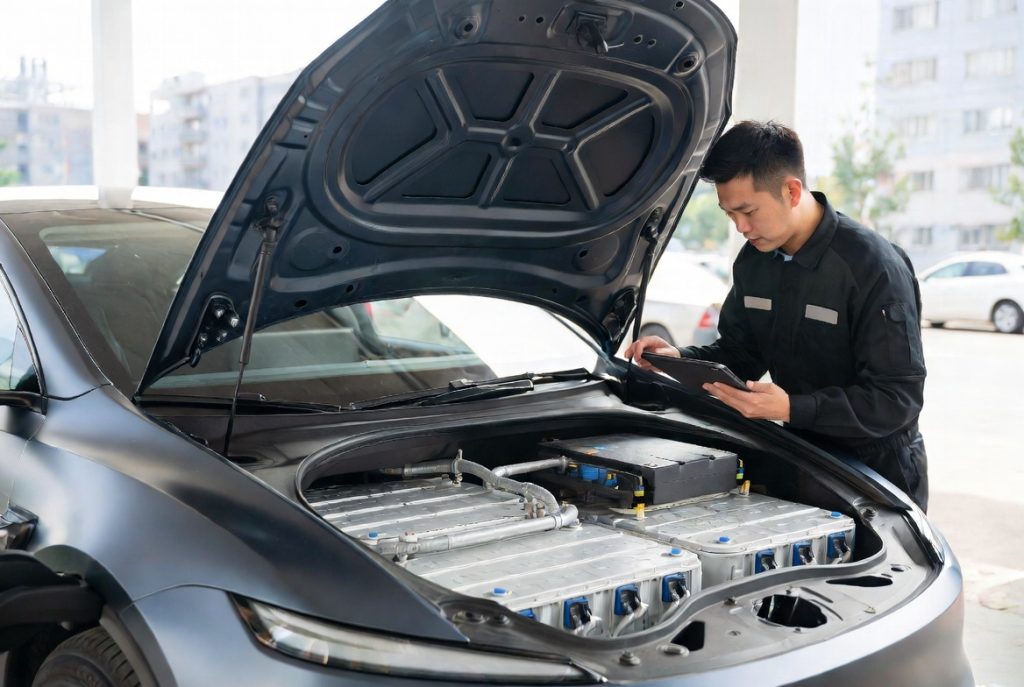
A minor rear-end collision that appears cosmetic may have transmitted enough force to damage battery cooling systems or the structural housing. The damage isn’t visible. The collision claim, if filed, covers it. If you don’t file because the bumper looks fine, you’ve missed the window to have the battery inspected under the collision event — and later-discovered damage becomes harder to attribute and claim.
Manufacturer Warranty Boundaries
Federal law requires EV manufacturers to warranty battery packs for a minimum of 8 years or 100,000 miles against significant capacity degradation — typically defined as falling below 70 percent of original capacity. Many manufacturers exceed this floor. Tesla warrants to 70 percent for 8 years on most models. Rivian and others have similar commitments.
What the warranty covers: manufacturing defects, premature degradation beyond the threshold, and in some cases software-related range reduction. What it doesn’t cover: physical damage from accidents, damage from improper charging, or degradation from owner behavior that violates the manual’s guidelines.
The warranty claim requires the battery to be intact enough for the manufacturer to assess it. If you’ve filed an insurance collision claim and the insurer has already processed a replacement, the manufacturer may argue the warranty claim opportunity has passed or been superseded. This is why claim sequence matters enormously.
The “Totaled at Low Impact” Reality
EVs total at lower impact thresholds than ICE vehicles. This surprises drivers who see minor-looking damage. The reason: battery packs are structural. In most EV designs, the battery pack spans the floor of the vehicle and integrates with the chassis. Any impact that compromises the pack’s structural housing may require replacing the entire battery system, which often makes the total vehicle repair cost exceed the vehicle’s actual cash value.
A 2021 EV with $18,000 in remaining actual cash value and a $16,000 battery replacement bill is a math problem with one answer. The insurer totals it. The driver gets a check for ACV minus deductible and loses the vehicle. If the driver was planning to use that vehicle for another three years, the outcome is more disruptive than it would have been with a comparable ICE vehicle.
Gap coverage matters more on EVs than on most vehicles for this reason. EVs depreciate in ways that can outpace loan payoff, and the total-at-low-impact dynamic means the window for gap coverage to matter is wider.
A Claim Sequence That Protects Both Coverages
When an EV incident happens that involves any possibility of battery contact or structural compression — even if it looks minor — use this sequence:
Step one: Notify your insurer, but don’t authorize repair immediately. Open the claim. Establish the incident date and nature. But pause before authorizing a specific repair path.
Step two: Get a manufacturer-certified inspection. Have a Tesla service center, Rivian service center, or equivalent certified shop inspect the battery system. This inspection should happen under the manufacturer’s warranty process, not just as a body shop estimate.
Step three: Document the inspection results separately. If the manufacturer’s inspection reveals a warranty-covered defect that was either pre-existing or triggered by the incident, you want documentation that distinguishes warranty items from accident-caused damage.
Step four: Coordinate the claims, don’t combine them. Warranty covers manufacturing defects. Insurance covers accident damage. They can both apply to the same event without conflicting — if you keep the claims separate and documented.
The drivers who get hurt are the ones who take the car to a non-certified shop first, authorize repair without a manufacturer inspection, and discover six months later that they have battery degradation that now has no clear claim path.
What to do this week: Look up your vehicle’s battery warranty terms and your insurance policy’s coverage language for battery components. Note the claim sequence above somewhere accessible. Compare coverage options that actually fit how you drive →
Last modified: February 12, 2026
About the Author: Jordan Lee