

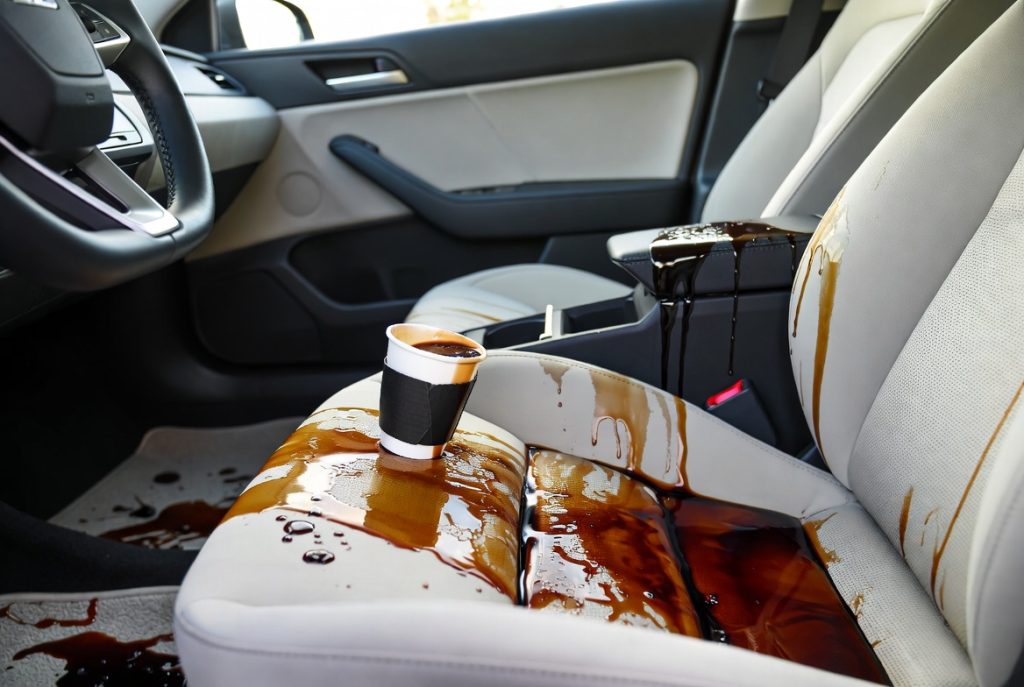
No, your auto policy won’t pay to clean coffee out of your seat. The question gets more interesting when you push on it — because interior damage that results from a covered event is a different story, and the line between “spilled my latte” and “covered interior loss” is less obvious than it seems on first read.
The General “Personal Use” Rule
Auto insurance policies cover damage from external events — collisions, theft, weather, falling objects. They explicitly exclude damage from normal use, wear and tear, and the inevitable consequences of using your car as a car. A spilled coffee is, legally and actuarially, a personal-use event. You’re in your car, you have a drink, the drink goes somewhere it shouldn’t. That’s your problem.
The routine wear-and-tear exclusion is broad and intentional. Carriers aren’t in the business of paying for stains, odor, fraying upholstery, or the slow degradation of interior materials from daily use. These are predictable, manageable costs of ownership. Covering them would make premiums significantly more expensive for everyone and invite a category of low-value, high-frequency claims that no one actually wants to file for real money.
This is worth stating plainly because the question comes up more than you’d expect, usually framed as “doesn’t comprehensive cover everything?” Comprehensive covers a defined list of non-collision perils. Interior stains from coffee, food, or pet occupancy are not on the list.
When a Spill Is Tied to a Covered Loss
Here’s where it gets interesting. If interior damage — including staining, warping, or material degradation — results directly from a covered event, the interior damage is covered as part of that claim.
Example: a hailstorm breaks your sunroof. Rainwater enters and saturates your seats and carpet. The seat damage is covered under your comprehensive claim because it’s a direct consequence of the covered peril. You’re not filing a “spilled water” claim — you’re filing a “hail broke the roof and the rain came in” claim, and the totality of the damage is assessed together.
Example two: you’re rear-ended while stopped at a light. The collision causes a beverage to discharge and damage electronics on the center console. That damage is part of the collision claim if you can document that it resulted from the impact. This requires the adjuster to connect the cause to the event, which is easier with clear documentation of what was in the car and where the damage occurred.
The underlying principle is causation, not category. Interior damage isn’t inherently excluded — damage from routine, non-covered personal use is.
Detailing as a Documentation Tool
If you plan to file a claim that involves interior damage — or if you’re buying or selling a car and want a documented baseline — professional detailing creates a useful record. A dated receipt from a reputable shop, with a description of the car’s condition before and after, gives you a reference point if you later need to argue about what constituted “pre-existing” damage versus claim-related damage.
Adjusters assess interior damage visually and experientially. A car that arrives at the appraisal clean and documented looks different from one that arrives with ambiguous staining of uncertain age. This matters most when you’re arguing that water damage from a broken window occurred after a specific storm event, not before.
Sealants and Accessories That Pay Off
For urban drivers who spend time in traffic with food and drink, interior protection is a routine maintenance investment, not an insurance product. Quality fabric protector applied to seats and carpet significantly reduces stain penetration and makes cleanup faster. WeatherTech-style floor liners catch the majority of spill volume before it reaches the carpet.
Seat covers — not the cheap universal-fit kind, but custom-molded options — protect the original upholstery from both stain and wear. For anyone planning to sell or trade in the car, pristine original upholstery is meaningfully better for resale than replaced or heavily cleaned alternatives.
None of this is insurance. It’s the category of ownership cost that insurance doesn’t cover, handled in the most practical way: prevent the damage rather than fight about coverage after.
What to do this week: Schedule a professional detail and keep the dated receipt in your glove box as interior condition documentation. Compare coverage options that actually fit how you drive →
Last modified: March 13, 2026
About the Author: Jordan Lee